

The Three Secrets of Happiness
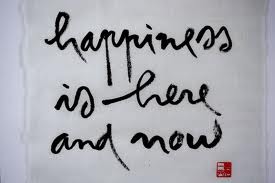

The Three Secrets of Happiness
By Piyamedhi
Edited by Cristina Ruize
Certain people view Buddhism as pessimistic; the religion of misery. The Buddha’s teaching of the first four noble truths includes the usage of words such as “suffering” and “unsatisfactoriness”. Therefore, it’s not surprising that these words tend to stick in people’s minds stronger than others. Actually, Buddhism is neither pessimistic nor optimistic. Buddhism, objective by nature is to see things as they really are. The Buddha taught us about life, beginning from our birth until our death. His teachings covers many aspects such as how to live wisely and happily, how to gain friends, accomplish goals, and even how to die peacefully. Buddhism is proclaimed as ‘a way of life’ or ‘a way of living mindfully’ as it has the potential to positively affect each moment and area of our existence.
Why does Buddhism always talk about suffering? Suffering is the truth of life that we all must first accept and recognize if we are to begin healing and extinguishing it at the root. Yes, the Buddha did speak about suffering; however, and more importantly he explained the method to overcome it. That is happiness in life. Let me share with you the three steps or secrets to happiness.
The first step to happiness is to enjoy whatever you do. “My father taught me to work; he did not teach me to love it” said Abraham Lincoln. Most of us are not satisfied or appreciate what we have in our personal life or enjoy what we do in our life. We tend to depend far too greatly on emotions such as likes or dislikes. At certain times, we do things because it makes us feel good and we want to continue that positive feeling. At other times, we avoid certain situations and suffer if someone forces us to work, compelling us at all costs to prevent such experiences from reoccurring. The question is how to achieve satisfaction with our current life and how to gain enjoyment/happiness in the work we do; whether small or large, significant or insignificant and to do so with genuine inner satisfaction. In Buddhism, we refer to “Kuttukammayatachandha” as the willingness or duty to approach any task, small or great with pure intention and a positive attitude. Imagine a life where we approach our actions without this form of mindfulness. Imagine working eight hours a day with hatred, dissatisfaction and suffering. Now imagine instead of just eight hours of suffering and hatred we experience 24 hours, seven days a week, 365 days a year, etc… of negative emotions. The result is a continuous cycle that is unhealthy for both the body and mind. If we train ourselves to take pleasure in the things we enjoy, then if we apply that same principle to those actions/situations we see as challenging or difficult, we will learn how to take pleasure in everything we do. There is a saying that, “If you do not have the things that you want, you have to like the things that you have.” We have to train ourselves to love and see the positive aspect of every experience that comes into our lives as a lesson and a tool for growth and development. When you wake up in the morning, think of how fortunate you are to be alive. Think of all the opportunities you have to help others and to enjoy one more day to the fullest. When you are having breakfast, enjoy every moment with all your senses and carry that level of enjoyment into each moment of your day. This is the first step to happiness.
The second step is mindfulness. “The lights are on, but nobody is home.” We are now in the IT (information technology) era. This creates many convenient tools designed to make life easier. However, this has resulted in a sort of absent-mindedness and unawareness of our actions. We are living on ‘auto-pilot’ mode and behaving like robots. We are cruising down the highway on our way from work but when we arrive home, we do not even recall the route we took to get home. This ‘highway’ could be a metaphor for our ‘life’. We are living by old habits without proper attention or observation to how it affects us or those around us. When you are eating, make sure you are eating your food and not having incessant thoughts or plans. We must change our old habits, which is a natural tendency to act without awareness. Take the simple action of walking as an example. When we walk, do we observe the moment we place our right foot in front and then our left that we are walking? In a practical approach, do not judge any moment as either good or bad, simply observe it as it is. If you are angry, know that you’re angry. If you are happy, observe that you are happy. Encourage a level of mindfulness and awareness in everything you do from sitting, standing, showering, drinking coffee, talking, and so on. Ask yourself, where is my mind – is it absent? In order to gain happiness, we must bring our mind back to the present moment. We must live in the here and now in order to experience the richness and possibilities inherent in each moment of our life. Our mind and body are inseparable therefore; try to not let the mind wander too often. According to the Buddha, mindful action is the most important training we must undertake. All the Buddha’s teachings lead to the training of mindfulness. Learn to live mindfully and one has learned the essence of these teachings.
The third step is concentration. In Buddhist countries there are a lot of Buddha statues. One of the most famous statues is of the meditating Buddha in formal posture. In Pali, we call this the “Samadhi posture”, which means ‘concentration’. When Buddhist followers look at this statue, it serves as a reminder to concentrate and focus completely on our actions. Try to be 100% mindful of every action and to place 100 % effort into every moment. When you sleep, try your best to calm the mind in preparation for sleep. When you eat, concentrate only on eating. Or focus your mind using one or more of the senses on what you are eating. Do you observe yourself doing these things? Can you really focus or concentrate? Do you find it difficult? If you answered “yes” to the last two questions, then you are not alone and let me reassure you that it is natural and normal to find it difficult in the beginning. Therefore, just as people go to the gym to train and strengthen the muscles of their body, similarly, we need training to strengthen and remove old/dysfunctional habits/attachments from our mind.
Sometimes we multitask so well that we assume we are so smart that we can do many tasks simultaneously. Such as watching a TV show and calling our friend at the same time. What is the quality of the conversation with our friend if we are not attentively listening and paying attention but are watching and listening to TV instead? I believe it is not a good habit, especially when you drive and text or drive and talk. It can cause many problems. Concentration is therefore the third key to happiness and success in life.
These are the secret trainings to happiness; enjoy, be mindful, and concentrate. Start with a couple of seconds and work your way up, without any expectations. Set your intention and commit with your mind and heart and simply be in the moment. Through training, we learn the tools to help us achieve a state of mindfulness that allows us to live with more enjoyment, peace and genuine happiness, which by default benefits everyone and everything around us. Over time, your practice will get stronger like nurturing a tree of happiness by watering and giving it the proper care. Then this habit will become second nature. You will find that mediation can help you to gain happiness in all aspects of your life. But you have to begin the change right now and start a new path. Enjoy the journey to happiness.
“Watch your thoughts; they become words.
Watch your words; they become actions.
Watch your actions; they become habit.
Watch your habits; they become character.
Watch your character, it becomes your destiny.”
― Lao Tzu
Recommended Posts
91 Years Lungtachi
July 10, 2016
อานาปานสติสูตร
January 22, 2015
True Love according to Buddhism
January 22, 2015